
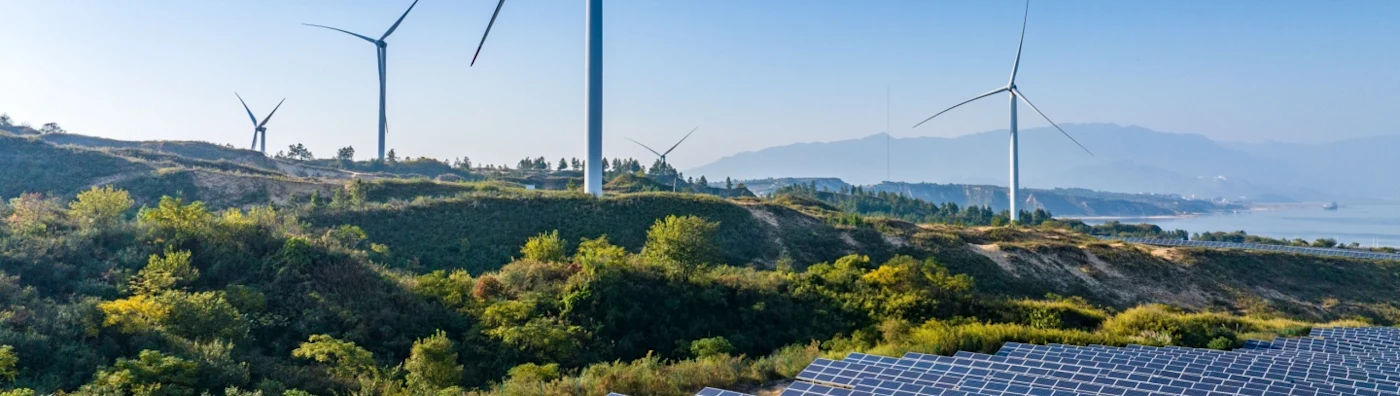
An increase in natural catastrophes fueled by climate change is driving the need for cleaner energy infrastructure through renewable energy resources like solar and wind farms. Federal and state governments are also focusing on building a low-carbon economy by pressuring legacy utilities to build up a clean energy infrastructure and become carbon neutral through the purchase of carbon credits.
Solar and wind farm projects, a critical component of creating a sustainable society, are extremely costly to finance and complete, particularly for startup renewable energy companies. Many utilities are also now making capital-intensive investments to improve their carbon footprints while simultaneously offsetting their carbon emissions today by purchasing the carbon credits required by cap-and-trade programs.
Surety bonds provide renewable energy companies with the financial flexibility they need to get project financing, transition to renewable electricity, and meet the requirements of state and federal carbon emissions policies in the form of financial guarantees.
Philadelphia Insurance Companies (PHLY), a Tokio Marine Group Company, is committed to the Renewable Energy space. PHLY has the required surety underwriting expertise to provide the surety product these entities need.
Drivers of Emerging Markets and Green Technologies
Federal or carbon emission policies, such as cap-and-trade programs, are growing across the country. According to the Center for Climate and Energy Solutions, 12 states currently have "active carbon-pricing programs" that require the power sector to limit carbon emissions. These programs require utilities or oil and gas companies to offset emissions through carbon credits, costing them anywhere from $10 million to $100 million.
At the same time, the U.S. Federal Government is increasingly offering incentives, including tax credits, grants, and loan programs, that support the growth of a renewable energy infrastructure and the scalability of these projects.
Other growth drivers in this sector include the Inflation Reduction Act, passed in 2022, which offers tax credits to businesses for transitioning to renewable energy or providing renewable energy solutions, and the Investment and Jobs Act, which provides funding for improving power grid resiliency.
But the changing landscape and new opportunities also create several challenges for renewable energy industries and utilities, including:
The costs of purchasing carbon credits.
High interest rates, which make it difficult to get renewable energy project financing. Renewable energy companies and utilities must instead rely on private equity companies and investment trusts to raise the capital needed to fund projects and their day-to-day expenses.
The increasing cost and time associated with transitioning to renewable energy resources.
Limited capacity of electric grid operators to facilitate renewable energy growth. The current electric grid infrastructure requires a complete overhaul as transmission lines cannot keep pace with the growth of renewable energy.
The Role of Surety Products
Surety bonds are a critical product that enables the renewable energy industries to take advantage of opportunities because they help address financing challenges by guaranteeing companies will have the capabilities and resources to complete projects successfully.
Surety products for utilities and renewable energy projects also provide a form of financial assurance to protect the project owners, as well as preserve the liquidity of renewable energy firms by providing off-balance sheet and unsecured credit in support of longer-term contracts such as procurement, interconnection, and power purchase agreements.
Additionally, surety bonds allow legacy utilities to bid on carbon credits sold by various states, which would otherwise be unaffordable for them to secure.
How to Get a Surety Bond
Renewable energy companies and utilities should direct their agents to work with an experienced surety underwriter that offers a variety of products to meet their needs.
PHLY is committed to the Renewable Energy industry and has the in-house expertise to underwrite renewable energy companies and legacy utility companies.
PHLY offers several types of surety bonds, including:
Commercial bonds with a full suite of commercial surety solutions.
Commercial Express bonds for a streamlined submission process with automated underwriting and execution of surety bonds through our online portal, PHLY Bond Express.
Contract bonds for many different types of contractors/subcontractors and builders.
Contract express bonds with up to $1 million single/aggregate for single or smaller account bonding needs.
Backed by Tokio Marine Group, PHLY is one of the largest and strongest-rated surety companies in the U.S. and can provide high capacity on a per-project basis to meet the increasing size of cap-and-trade bonds.
Both PHLY and Tokio Marine Group remain committed to protecting the natural environment and supporting emerging markets.
Learn more about PHLY's surety underwriting at https://www.phly.com/Surety or by logging into the MyPHLY portal.
Additional Resources:
https://www.c2es.org/document/us-state-carbon-pricing-policies/
https://www.eia.gov/energyexplained/renewable-sources/incentives.php
https://www.whitehouse.gov/cleanenergy/inflation-reduction-act-guidebook/