
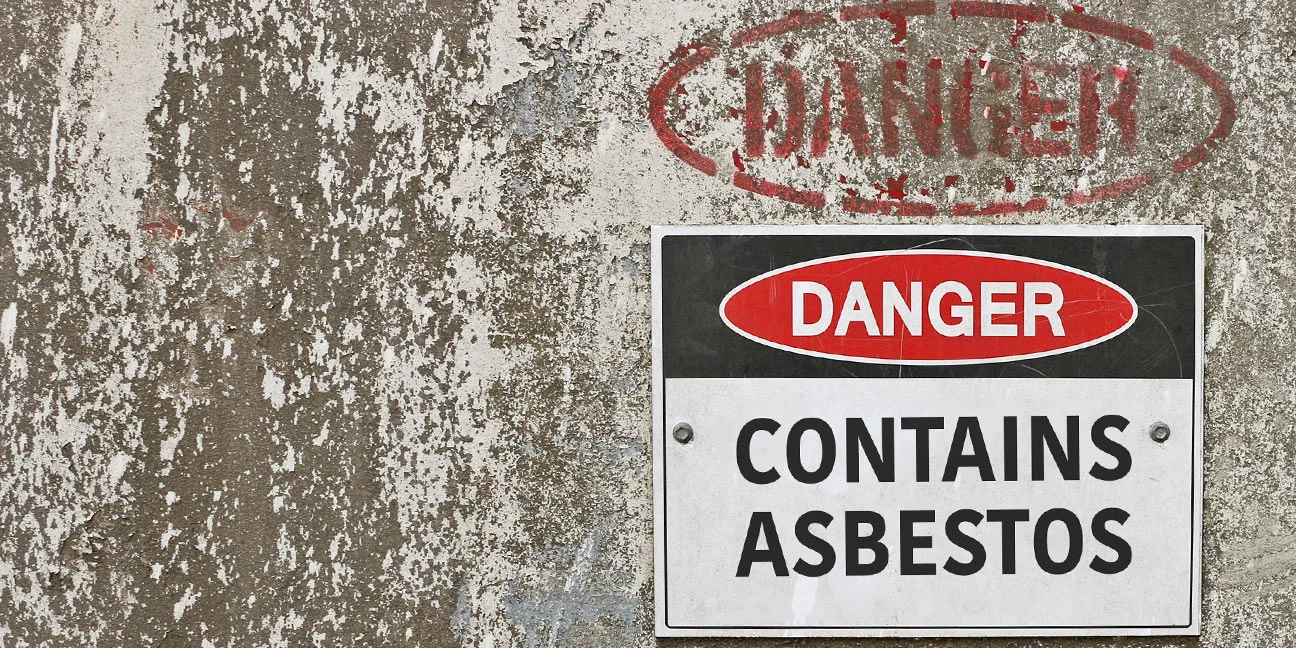
An estimated 20 million people in the United States are at risk for developing a cancer caused by a naturally-occurring mineral that was commonly used in building materials from 1930 to 1980. Only with the advent of environmental regulatory oversight and associated toxicity evaluations was it identified that this mineral was hazardous to human health. That mineral's name is asbestos and the disease it causes is mesothelioma. As an Environmental insurance carrier, Philadelphia Insurance Companies (PHLY) is partnering with the Mesothelioma Cancer Alliance to raise awareness of both the health risks and liability risks associated with asbestos exposure in the workplace.
Asbestos is able to resist heat, fire, and other chemical reactions and was frequently used in insulation, cement, piping, wallpaper, floor/ceiling tiles and mastic, caulking, and shingles - just to name a few of the applications. Many of our current buildings and structures still have asbestos-containing materials (ACM). If these materials remain undisturbed, the toxin represents nominal impacts to us as occupants or users of these buildings. When that material is disturbed, however, friable (easily crumbled) dust can become released into the air. This dust is microscopic in size so when inhaled, it can become lodged within respiratory systems; especially the filaments within lungs. In some cases, the exposure and inhalation of these microscopic asbestos fibers causes cancer.
Mesothelioma cancer only has one known cause; exposure to microscopic asbestos fibers. Mesothelioma is a form of cancer that has a latent development; often not showing signs of illness until 20-50 years after the exposure occurred. Although the most commonly known type of mesothelioma is lung cancer (accounting for 70-80% of all cases), there are actually three types of mesothelioma cancer - lung, heart, or abdominal cavity. Following diagnosis, prognosis is generally poor with patients typically only surviving 12-21 months. From 2001 - 2010, the following four states represented the highest rate of mesothelioma deaths: California (2,637), Florida (1,713), New York (1,443), and Texas (1,307).
Lawsuits and liability tied to ACM exposure are becoming more prevalent with the diagnosis of mesothelioma, often contracted through asbestos exposure in the workplace. Liability protections in risk transfer vehicles (such as insurance) are widely unavailable in the marketplace due to previous General Liability policy legacy issues from asbestos-exposures representing one of the insurance industry's biggest and longest running liabilities. The insurance industry sustained (and is still capturing in what is called "run off" groups) significant losses with an estimated asbestos-related loss sum of $65 billion in the United States for insurer and reinsurer losses according to Tillinghast-Towers Perrin, an actuarial consulting firm. While there are insurance policies in the marketplace that can provide some asbestos protections, the coverage availability is largely dependent upon the individual risk, market, and property characteristics. Such coverage availability is usually limited in scope and can be costly to purchase with insurer reliance upon risk management practices as the precursor to accepting any risk transfer from asbestos-containing materials.
So, how do you protect your workers or yourself from asbestos exposure and allegations or lawsuits associated with mesothelioma using risk management practices?
1. If your workplace was constructed between 1930 and 1980, the structures should be inspected and tested (if necessary) for the presence of ACM prior to beginning any construction project to avoid release of fibrous asbestos into the building or heating, ventilation, and air conditioning (HVAC) systems.
2. Utilize trained and licensed asbestos abatement professionals (accredited under a training program at least as stringent as the EPA Model Accreditation Plan) when you are unsure of how to approach or handle suspect (or known) ACM. Remember: there is no "safe" level of exposure to this material.
3. After inspection, if the building materials are found to contain asbestos, but are observed to be in "good condition" and not an immediate threat to human health or environment, the materials may remain in place. However, it is still important to routinely monitor the ACM to ensure that it remains in such condition. An Operations and Maintenance (O&M) program is a formulated plan for training, work practices and surveillance to help you in this process.
4. Finally, in accordance with Occupational Safety and Health Administration (OSHA) rules and regulations, employers are required to further protect workers by identifying and controlling work practices while instituting engineering controls (physical controls) within the building to reduce airborne levels. Administrative controls (training, identification and awareness) along with personal protective equipment (PPE), if required, should be provided as well.
Above all, you are responsible for your protection and your workplace safety; if you or your employer is not currently instituting these best practices, visit the following resources to learn how you can better institute business programs that mitigate the opportunity for exposures to asbestos.
Additional Resources
Mesothelioma Cancer Alliance website for more asbestos/mesothelioma information: www.mesothelioma.com/mesothelioma
EPA site on asbestos: www.epa.gov/asbestos
OSHA site on asbestos: www.osha.gov/SLTC/asbestos/