
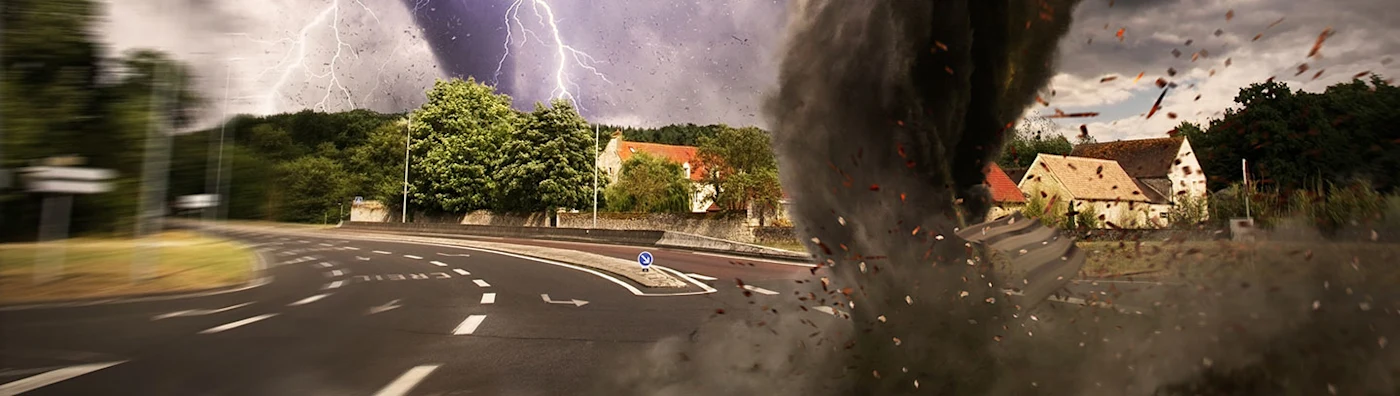
When The Wizard of Oz blew into theaters in 1939, one major character was absent from certain news reports. Before 1948, mentioning "tornado" during a weather broadcast could end the career of the meteorologist. Because of their seeming unpredictability and the likelihood of public panic, the term was effectively banned by the Weather Bureau. But thanks to advances in technology and the work of two Air Force meteorologists, the tornado forecast celebrated its 75th anniversary in March 2023.
While science has improved the ability to forecast these destructive storms, they are still incredibly erratic, wreaking havoc on one side of a street while leaving the other unscathed. That is why organizations should know what to do before, during, and after a tornado.
Darkening Skies: Prepare Now for the Threat of a Tornado
Tornado season generally stretches from March through June; however, storms with the potential for tornadoes can happen any time of year. And while many believe these happen mainly in the Central Plains states, known as Tornado Alley, major tornados have been documented all over the country.
No matter where they are located or what time of year it is, organizations need to be prepared by implementing and continually updating their Emergency Action Plan (EAP). The Occupational Safety and Health Administration (OSHA) provides an online eTool that allows organizations to build their own plan that covers a variety of emergencies, including tornadoes.
Key Pieces of a Tornado Preparedness Plan
Identify a safe area in your buildings or a shelter. OSHA suggests the following when determining a safe place:
Seek a small interior room or hallway on the lowest floor possible
Stay away from doors, windows, and outside walls
Stay in the center of the room, and avoid corners because they attract debris
Seek rooms constructed with reinforced concrete, brick, or block with no windows and a heavy concrete floor or roof system overhead
Avoid auditoriums, cafeterias, and gymnasiums that have flat, wide-span roofs
Have a disaster preparedness kit. Among other items, these kits could include a hatchet or cutting tool to help clear debris, shoes, water, weather radio, and fresh batteries. Also, consider emergency kits for the vehicles in your fleet in the event your drivers are caught in a storm.
Know your local warning system. You should be able to recognize the siren of your community warning system. Sign up for emergency alerts from the Wireless Emergency Alerts (WEAs) system, the Emergency Alert System (EAS), and the NOAA Weather Radio (NWR).
Watch vs Warning - A watch means the conditions are favorable for a tornado to form. A warning means rotation has been verified or a funnel cloud has been identified and you should seek shelter immediately.
Train employees and complete tornado drills regularly. Training for employees should include the warning system, what to do, and where to go. Drivers should also be trained on what to do if they are caught in a tornado while operating a vehicle.
Consider implementing vehicle telematics. Vehicle telematics can help add another level of protection, from locating vehicles that are stranded through GPS technology to getting vehicle health alerts. PHLYTRAC is a no-cost telematics solution provided to PHLY auto insurance clients.
When the Skies Fall: Staying Safe During a Tornado
There are several signs of an oncoming tornado, including a greenish sky, large hail, and even a roaring noise like an oncoming train. The most recognizable element is the churning clouds that suddenly drop to the ground, spinning up debris. These funnel clouds can be thin columns or miles wide. Be ready to take action if you are caught in an oncoming tornado.
Get to your safe room or shelter immediately. Be sure to grab your disaster kit if it is not already in the room. Stay away from windows, auditoriums, and upper floors.
If possible, stay up to date with reports from EAS, NOAA Weather Radio, or local alerting systems. Make sure a battery-operated weather radio is available or use smartphone apps if phones are charged.
If you're in a vehicle, do not try to outrun a tornado. Drivers should find shelter immediately if possible. If the driver can't get to a shelter, find a safe area to park, leave the engine running and seatbelt buckled. Put your head down below the windows and cover your head with your hands and a blanket or jacket if possible.
If outside, get to a shelter or sturdy building. If unable to get to a building, find a low-lying area such as a ditch and lie flat, covering your head and neck with your arms and a blanket or jacket. Stay away from bridges or overpasses.
As the Skies Clear: Staying Safe After a Tornado
The hours after a tornado can be equally as dangerous so it's important to stay alert and remember to keep yourself and others safe while checking on employees and surveying damages.
Contact emergency services if anyone is injured or in need of assistance.
Continue to monitor weather reports and follow instructions from local authorities.
Activate your Business Continuity and Emergency Response Plans. Having these plans ready to go will help guide your organization in responding and recovering from disasters. Online tools are available to help with this important planning.
When safe to do so, begin documenting damages to buildings and other property. Take pictures and make notes of what is damaged or missing. Attempt to mitigate further damages by using tarps or other mitigating measures.
Be safe during clean-up and while using equipment such as generators. Wear appropriate clothing such as thick-soled shoes, long pants, and work gloves. Be mindful of fuel-powered generators as they can produce dangerous levels of carbon monoxide.
While these powerful forces of nature can be erratic and terrifying, creating a plan, employing that plan, and responding to the aftermath, can help your organization survive the storm.
Additional Resources:
Tornadoes | Ready.gov
Business Continuity Plan | Ready.gov
Ready Business SEVERE WIND TORNADO TOOLKIT (PDF)
Threat Plans for Tornadoes | Stay In Business
Tornado Preparedness - National Safety Council (nsc.org)
Tornado Safety Tips | Tornado Preparedness | Red Cross