
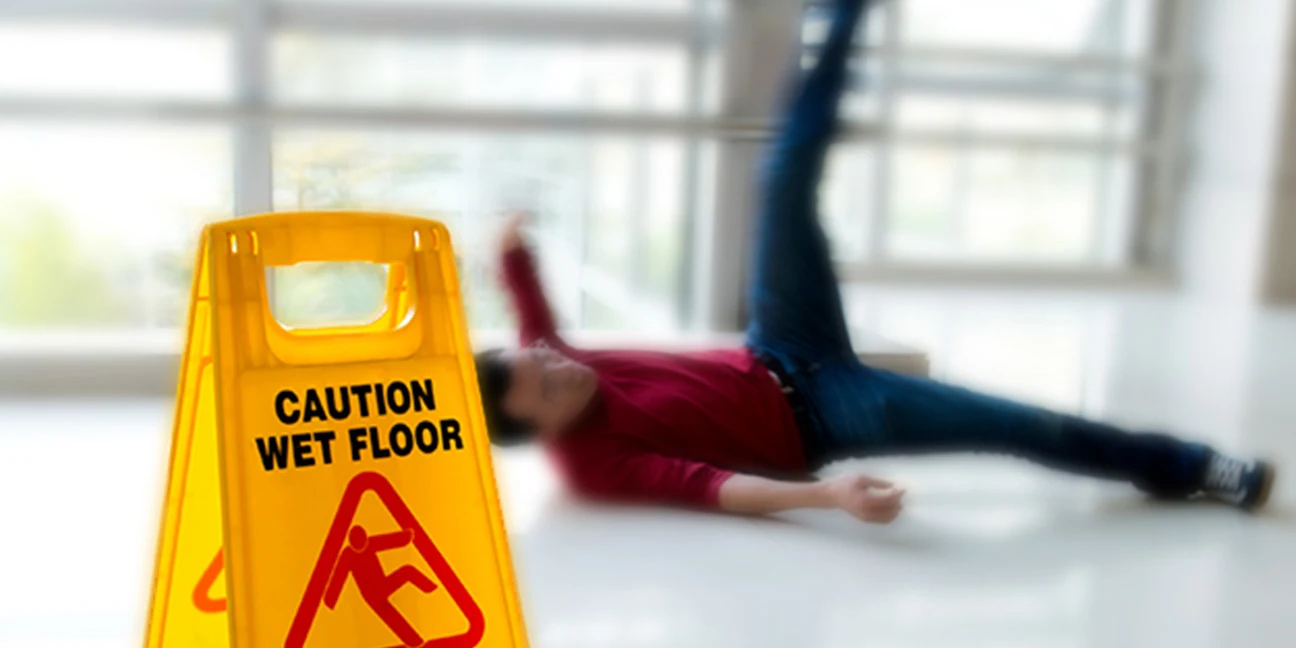
Slip, Trip, And Fall Prevention
Slips, trips, and falls (STFs) have been a staple in comedy for centuries, from Charlie Chaplin slipping on a discarded banana peel to YouTube clips of people tripping over their own feet. However, the sobering reality remains that STFs accounted for 8.8 million non-fatal injuries and 47,000 deaths in 2023. Read on for simple steps your organization can take to help reduce slips, trips, and falls.
The High Cost of Slips, Trips, and Falls
A woman in New Jersey was awarded nearly $1 million for injuries suffered when she slipped on water from a burst pipe in her local grocery store. Another woman, also in New Jersey, settled a suit for $950,000 after a fall outside of her apartment led to her developing a flesh-eating virus in her injured hand. While these two incidents are extreme cases, the average cost of a STF injury is $20,000, while the cost to defend such a claim can be as much as $50,000.
Prevent the Accidental, and Watch Out for the Intentional
Slip, trip, and fall incidents are preventable. However, there is another aspect of STFs of which every organization should be mindful - the deliberate slip, trip, and fall. This type of fraud can be easily perpetrated by a single individual pretending to fall on the ice he threw on the floor himself or as complex as a sophisticated ring of individuals running a scheme that cost NYC businesses and insurers more than $31 million.
According to the Federal Bureau of Investigation (FBI), "insurance fraud (non-health insurance) is estimated to be more than $40 billion per year. That means insurance fraud costs the average U.S. family between $400 and $700 per year in the form of increased premiums."
Steps to Stomp Out Fraud
The National Insurance Crime Bureau suggests some tips for how organizations can protect against STF fraud, including:
Be aware of possible hazards on your property, and be proactive with corrective actions
Install cameras, post signage advising that video is in use, and review footage regularly
Train employees how to react and what to do if someone falls
Secure interviews of witnesses as close to the incident as possible - memories are best when statements are taken soon after the incident
Involve your insurance company as they may recommend other preventative measures
Steps To Take Right Now for Slip, Trip, and Fall Prevention
PHLY's comprehensive guide and checklist provided below detail a number of recommendations, including the following steps you can take right now, to help reduce your risk of slip, trip, and fall accidents.
Provide Walk-Off Mats
Putting mats at the entrances of a business is a simple and effective way to keep people from slipping and falling. When someone walks into a building, mats pick up dirt, debris, and moisture from their shoes before it gets on the floor and becomes a hazard. This floor covering is especially useful when it's raining or snowing or in high-traffic areas where dirt and moisture tend to build up.
Businesses should also routinely clean the mats in their establishment so that they remain free of dirt and debris and continue to provide good traction. To provide extra foot stability, mats should also be taped to the floor to keep them firmly in place. Meanwhile, worn-out or tattered mats should be replaced as soon as possible so they don't become tripping hazards themselves.
Businesses can further prevent slip, trip, and fall accidents by using mats to cover cables, extension cords, and wiring that could trip visitors and staff in common areas.
Keep Walkways Dry and Drained
Wet surfaces are one of the main reasons for slip, trip, and fall accidents inside and outside a building. So, business owners must ensure that the areas where people walk are dry. They can do this by draining waterways. Outside doorways, parking lots, and walking paths should all have well-functioning drainage to channel water away from walkways.
Businesses should also routinely check for drain damage, such as collapsed or broken sections of pipe or tree root intrusion. When there is damage, it should be repaired as soon as possible by a professional. They should also look for and remove obstacles in the drain, such as branches, leaves, dirt, and snow.
Train Employees
Educating staff on identifying and mitigating hazards is another effective strategy for slip and fall prevention. For example, employees can bring wet walking areas to management's attention or take the initiative to post a sign warning of a spill or hazard. They should also remove anything from the workspace that could cause a tripping hazard, such as cords, wires, empty boxes, and clutter.
Additional Resources for Preventing Slips, Trips, and Falls
Slips, trips, and falls can be prevented through proactive, practical steps. Review the resources below for more information and to assess your organization's risk.
Includes slip, trip, and fall causes and solutions; best practices; a checklist; a log for snow and ice removal; steps for responding to a slip, trip, and fall incident; and an incident report form.
PHLY customers may complete and return this self-assessment for a complimentary evaluation of their organization's slip, trip, and fall risk.